WPBS Weekly: Inside the Stories
Insect Collectors Izzy and Maggie Verra
Clip: 3/31/2026 | 6m 3sVideo has Closed Captions
The Verra sisters find beauty in the small things.
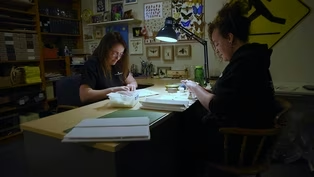
This story is all about bugs! Specifically, insect framing, a passion that began for Izzy and Maggie Verra when they were kids. While it may creep you out at first, when you take a closer look, you'll find the beauty in their work, turning the critters living beneath us into a stunning form of art.
Problems playing video? | Closed Captioning Feedback
Problems playing video? | Closed Captioning Feedback
WPBS Weekly: Inside the Stories is a local public television program presented by WPBS
WPBS Weekly: Inside the Stories
Insect Collectors Izzy and Maggie Verra
Clip: 3/31/2026 | 6m 3sVideo has Closed Captions
This story is all about bugs! Specifically, insect framing, a passion that began for Izzy and Maggie Verra when they were kids. While it may creep you out at first, when you take a closer look, you'll find the beauty in their work, turning the critters living beneath us into a stunning form of art.
Problems playing video? | Closed Captioning Feedback
How to Watch WPBS Weekly: Inside the Stories
WPBS Weekly: Inside the Stories is available to stream on pbs.org and the free PBS App, available on iPhone, Apple TV, Android TV, Android smartphones, Amazon Fire TV, Amazon Fire Tablet, Roku, Samsung Smart TV, and Vizio.
Providing Support for PBS.org
Learn Moreabout PBS online sponsorship- Izzy and Maggie.
Vera grew up in the country spending most of their time outdoors.
Nature was their playground, but they didn't discover their creative bug until much later.
When Izzy worked at a shop that sold framed insects, that moment sparked something big.
And now the Verra sisters are sharing a one of a kind artistic bug collection that turns the natural world into stunning art.
- We grew up like with bugs under our pillows because we just didn't, we wanted to be able to play with them the next day.
So it was just something that we had in us as kids.
And then when I worked in the shop and saw them and to be able to see them still and under the, like under the glass where you know it's gonna be safe and it's so, so beautiful.
That really inspired me to start collecting.
And then once my collection got to a certain point, I got myself a pinning set and I filled our house with bugs.
And then my spouse said, if you wanna keep pinning, which is fine, you have to start selling.
So my sister and I, Maggie did a show and at that show we brought 30 pieces and I think I went home with six.
So that was good for a first show and Maggie and I thought we could really do this as a business and we just went for it.
- What started with just 30 pieces has grown into a collection that's turning heads everywhere they go.
At first some people are a little unsure, framed bugs aren't something you see every day, but once they stop and look closer, curiosity takes over.
And it's not just about the wow factor.
Every specimen is ethically and responsibly sourced.
- We have people who see this as a dead thing basically, and it does make them a little bit uncomfortable and we sometimes too feel that as well.
But we do purchase from the most ethical distributors that we can find and they purchase overseas from the most ethical distributors that they can find.
And they're also taking really, really good care of the people in these countries that are collecting or raising these specimens.
And that is really important to us as well.
That those people on the ground are getting paid well and that they're valued for the work that they do.
We never, ever take like endangered species or any species that, you know, there's not a lot of, basically a lot of what we have too are pests in the, in their local countries and the distributors that we work with as well.
A lot of them give back to reforestation and repopulation.
It is something that's always on our mind.
- Their specimens come from around the world, from Peru and Indonesia to Thailand and Madagascar, places known for some of the most unique insects on the planet.
And while a lot of their collection is sourced internationally, the sisters are quick to point out, there are some very cool bugs right here in Canada, too.
- Lots of really cool bugs in Canada.
We have really beautiful moths.
We have, one of my favorites is the toe biter.
It's a water beetle.
People have seen them in their pools and in lakes and stuff like that.
That's the biggest bug we have in Canada by mass.
And then we have some moths I think that are larger in wingspan.
And we have beautiful big dragonflies.
It's not just about finding unique specimens, it's about the detailed hands-on work that turns them into art.
What you see in the frame is only the final result, but the real artistry happens - Long before that.
We purchase all of our specimens online and they get imported in some take months to import.
So we get them in, they go through customs and we get a big box of specimens.
And then we get together and we go through these boxes looking at all the incredible pieces.
And we split up who gets to work on what and we have to rehydrate them.
So each piece gets like opened up gently and put into a box with a paper towel and water spritzed on it.
And then we put another piece of tissue paper down, another layer and we spritz more water on it.
And we'll put upwards of like 50 specimens into these bins to work on at one time.
Yeah.
So then once they're a couple days in the hydration box, we can take them out.
It's really stinky at this phase and then we pin them out.
Yeah.
So we have to individually pin each specimen into the perspective position that we want.
- And even with all that care and detail, the sisters are the first to admit they're still learning.
They're not claiming to be bug experts.
They're artists drawn to the beauty shape and color of each specimen and they've built their collection around that creative lens.
- Both of us come with an artist background.
We lean heavy into that.
We always say we're artists first.
We are learning every day more and more about bugs.
And we, you know, maybe now we know more than the average person about bugs, but we learn so much from the customers that come to our booth.
We love having the kids in the booth.
They get really, really excited.
And we love seeing people's, maybe their minds change about bugs as they stand at our booth.
- The Verra Sisters aren't only bringing beautiful artwork to the community.
They're sparking curiosity and giving people a new appreciation for bugs, nature and the world right at our feet.
- A lot of people have never ever seen the specimens that we have and they don't even know that they exist in the world.
The first question people ask us is, are these real?
And they're always shocked when we say yes.
- It's really easy to enjoy them and to just see them for what they are, which is a beautiful creature, often like fuzzy or with like the cutest little ballerina feet you ever saw.
And it's just really easy to like open yourself up to finding something like even if it's small, that's beautiful about them.
For WPBS Weekly, I'm Gail Paquette.
Providing Support for PBS.org
Learn Moreabout PBS online sponsorship












Support for PBS provided by:
WPBS Weekly: Inside the Stories is a local public television program presented by WPBS